
by Tasha Shayne
Living Holism
livingholism.com
(If you need help getting back on track with your health through whole-food nutrition, you can book a virtual session with me at livingholism.com).
Whether it’s to prevent a cold or recover from one more quickly, most of us know that vitamin C is important for immune system function.
Isolated Vitamin C Is Far Less Effective
Than Vitamin C in Whole Food Form
The problem is that when most people want to support their immune systems, they usually opt for a vitamin C pill.
But taking an isolated form of vitamin C, rather than a food that contains vitamin C, is far less beneficial because the body does not receive it in the same whole-food complex it would in nature.
Nutrients don’t work in isolation in nature. They come in complexes, with minerals, flavonoids, antioxidants, and other helper nutrients that support how they work in the body. When you isolate one vitamin from the rest of its complex, the body may have to rely on its own nutrient reserves to help process and use it.
That is why whole foods are so powerful. They do not give the body one isolated piece. They give the body nutrients in context.
A whole food comes with its natural structure, cofactors, antioxidants, minerals, plant compounds, and helper nutrients. That whole complex matters.
Vitamin C Does More Than Fight Colds
Most people think of vitamin C as what you take when you feel a cold coming on. And it deserves so much more credit than that.
Vitamin C is involved in collagen production, which affects the skin, connective tissue, joints, and the strength of the body overall. It supports wound healing. It helps protect the body from oxidative stress. It plays a role in healthy gums and teeth. It helps with circulation, energy production, and cognitive function.
It also helps the body absorb iron from plant foods, which makes it especially important for anyone eating a vegan, vegetarian, or plant-based diet.
Camu Camu & Acerola Cherry:
the Ultimate Vitamin C Foods
When people think of getting vitamin C in whole-food form, they usually think of oranges.
Oranges are a wonderfully nutritious food, but if you’re looking for the ultimate vitamin C superfoods, there are two berries that have far more vitamin C packed into them: camu camu and acerola cherry.
Camu camu has been studied as having roughly 30 to 60 times more vitamin C than oranges, depending on ripeness, form, and soil quality.
Even more potent is acerola cherry, which has been studied as having roughly 50 to 100 times more vitamin C than oranges.
The Only Vitamin C–Rich Supplement
I Recommend
As a nutrition coach, my focus is always on whole foods, and I refuse to recommend synthetic, isolated supplements when the body was designed to receive nutrients in their natural complexes. Unfortunately, the vast majority of nutritional supplements are made with isolated or synthetic nutrients, even when they market themselves as strictly whole food.
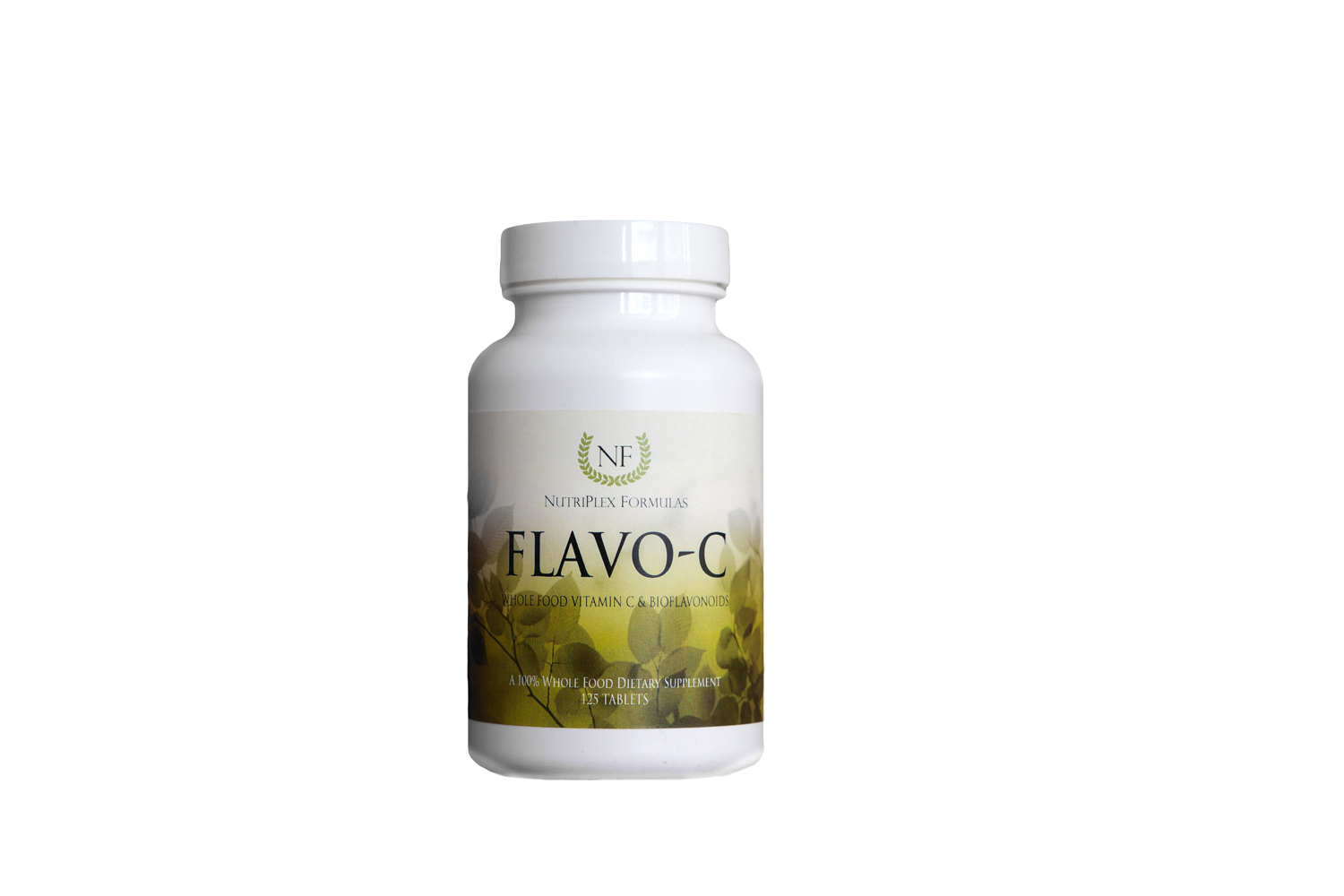
NutriPlex Formulas is one of the few exceptions, offering products with simple, yet impressive, ingredient labels. And, of the vitamin C products I’ve found, their Flavo-C is the one I trust and recommend.
Flavo-C is a whole-food vitamin C complex made with camu camu, acerola cherry, and numerous other whole-food ingredients packed with flavonoids and other whole-food ingredients that support immune health, collagen production, skin health, wound healing, iron absorption, inflammation balance, and overall wellbeing.
So if you’re looking for a product to support your efforts at rebuilding good health, skip the isolated vitamin C pills, adopt a nutrient-dense diet, and consider adding Flavo-C to your regimen.
(If you need help getting back on track with your health through whole-food nutrition, you can book a virtual session with me at livingholism.com).